How one founder and one AI operating system now ship software that used to need an entire department.
For most of my career, shipping serious software was a team sport.
You needed a product manager to shape it, backend and frontend engineers to build it, a QA engineer to break it, a DevOps person to deploy it, and someone to run standups just to keep everything moving.
That was simply how real work got done. I believed it the way you believe gravity works.
I don’t believe it anymore.
For the past few months I’ve been running full software projects — designed, built, tested, deployed, monitored, and iterated — completely on my own. Not toy projects. Real systems with users, databases, payments, and uptime that actually matters.
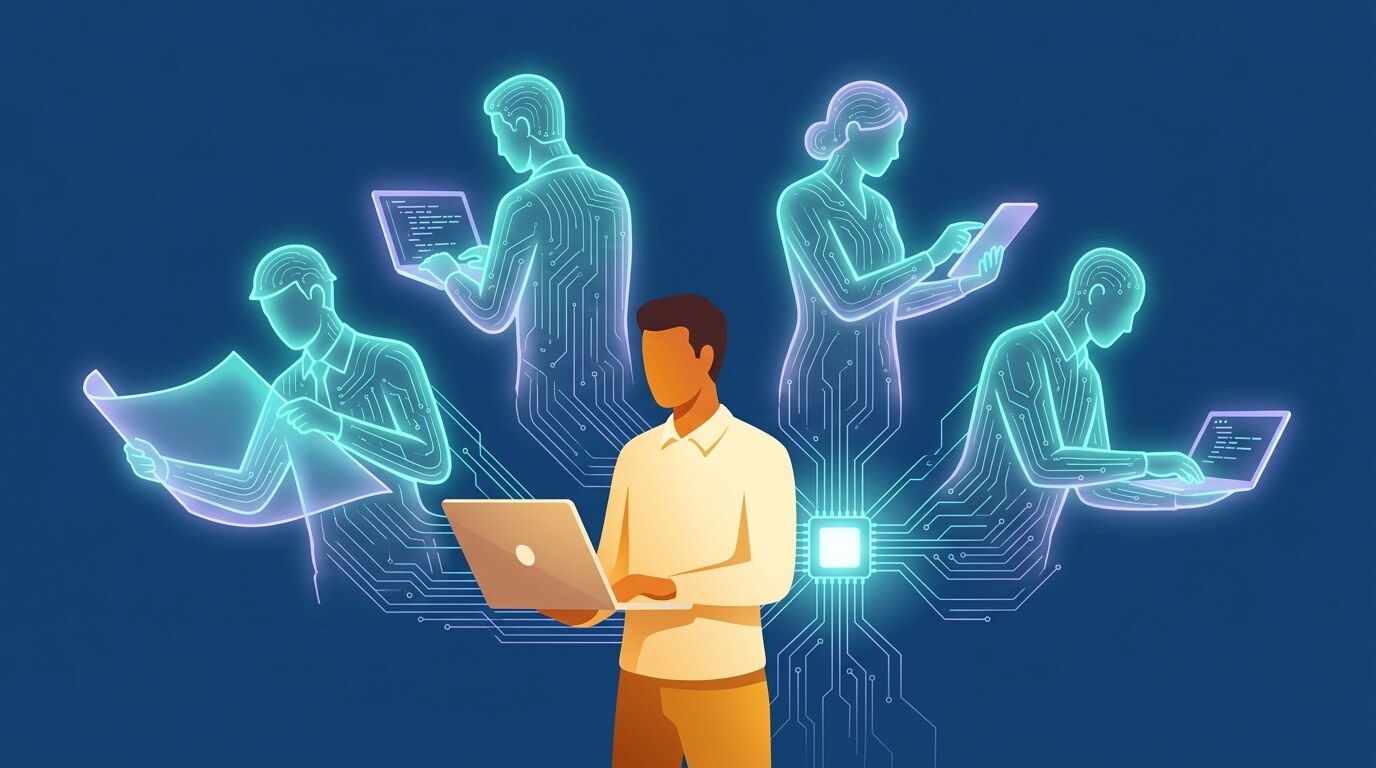
The “team” is me plus the AI Operating System I built.
This isn’t a prediction. This is how I work now.
The Foundation Isn’t the AI — It’s the OS Around It
Here’s what most people miss.
A powerful AI model by itself is like a brilliant contractor with amnesia. Every session it shows up not knowing your business, your doctrines, or where anything lives. So you waste half your energy re-explaining the same things over and over.
The first thing I built wasn’t features. It was the operating system the AI lives inside — TOS.
TOS gives the AI three things it never had before:
- Memory that survives across sessions
- Real tools and keys to actually do the work
- A thick stack of registries, doctrines, and context that loads automatically
Once that foundation was stable, the AI stopped being a clever visitor. It became resident — deeply embedded in the business.
Then I Added the Discipline
Capability without process is just fast chaos.
So I used the OS to build something solo founders are told they don’t need: a complete, repeatable development process. The kind a twelve-person team would run — now run by one.
We work in tight six-day sprints. The backlog is real, not a wish list. Every push deploys automatically. Tests guard the build. Doctrines guide every decision. And the context never resets.
The roles collapse beautifully: The AI becomes architect, engineer, tester, and documenter. I remain the decision-maker, the taste judge, and the final owner.
What a Real Day Looks Like
I start by reading, not typing.
Fifteen minutes catching up on what shipped overnight, what the system is suggesting next, and where my judgment is needed. Then I spend my best hours on the things only a human should do: hard calls, creative direction, customer insight, final quality.
The heavy lifting — implementation, testing, refactoring, deployment — happens whether I’m at the desk or not.
The Leverage Has Moved
Let me be clear: The system doesn’t replace me. On the truly hard problems — taste, judgment, knowing what’s worth building — it isn’t even close. The bar didn’t get lower. The leverage got enormous.
For a long time, the size of what you could build was limited by the size of the team you could afford or manage.
That cap is coming off.
For a huge range of meaningful projects, the best team is now one clear-headed founder and one well-built AI Operating System.
I don’t think this is a niche future. I think it’s becoming the new default.
I’m building all of it in public — the wins, the dead ends, and the messy middle. If you want a front-row seat to this shift, follow along.
The most interesting part hasn’t shipped yet.