

How TrendAI OS Locked 64 NDIS Compliance Decisions for a Pre-Revenue Venture in Two Sprints
In April 2026, HappyHome was barely more than a registered company shell — no subcontractors, no clients, no systems, and no NDIS registration. In a heavily regulated sector where most new operators write a fictional Service Delivery SOP and pray the first audit doesn’t expose it, I took a different path.
I didn’t write the SOP. I built a compliance blueprint instead.
In six hours of operator time across two sprints, TrendAI OS helped produce a living compliance posture with 77 evidence rows across 7 regulatory domains — every item flagged, every gap owned. HappyHome is now audit-ready before it has even earned its first dollar.
This is what an AI Operating System does in regulated environments. It doesn’t replace human judgment. It inverts the order in which decisions are made.
The Inversion
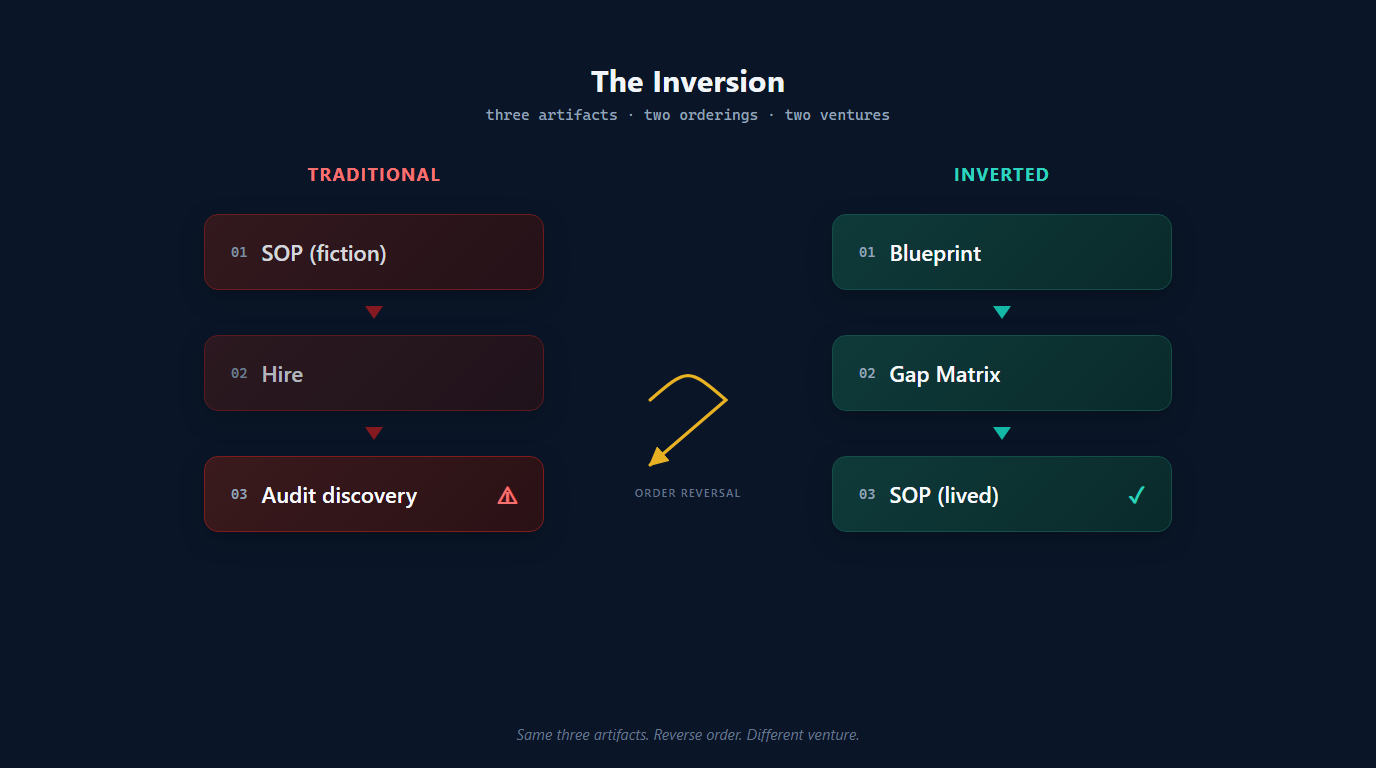
Traditional regulated launches usually follow this dangerous sequence:
- Write a polished SOP describing how you intend to operate
- Hire people
- Discover during audit which parts were wishful thinking
The TrendAI approach reverses it:
- Blueprint first — Force every operating decision into existence
- Gap matrix second — Surface exactly what evidence an auditor would demand
- SOP last — Write it only when real practice exists to document
Sprint One: The Forcing Function
I began with what I thought was a simple story: “HappyHome Service Delivery SOP.”
Within minutes, the TrendAI agent challenged the premise. We had no operations yet. Writing the SOP would have been writing fiction.
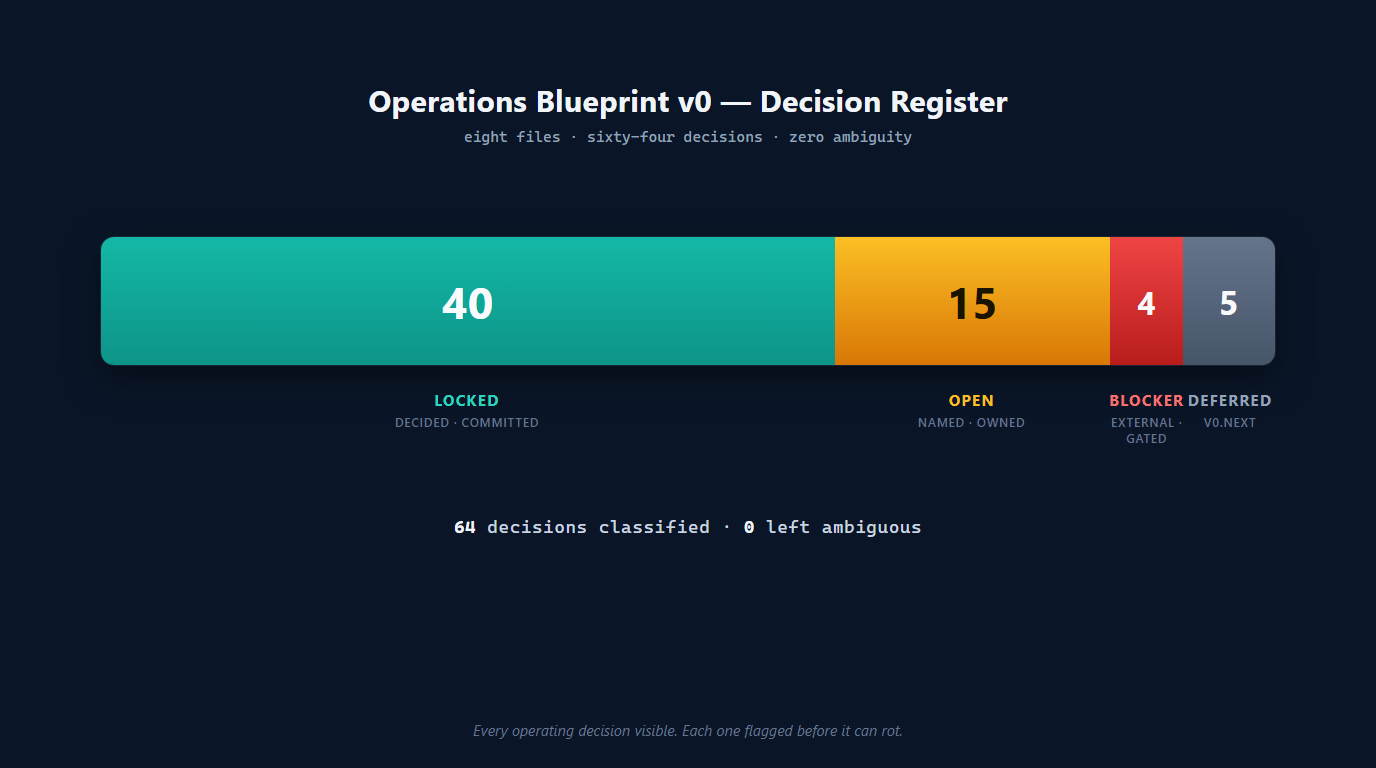
So we pivoted to an Operations Blueprint v0 — eight focused documents (~85kb total) covering:
- Regulatory frame and corporate structure
- Service catalogue (5 in-scope + 10 explicitly out-of-scope)
- Delivery model and sham-contracting protections
- 8-stage operational job lifecycle
- Toolchain decisions (build vs buy)
- Full compliance posture
- Ordered build sequence
Every section ends with a decision register: 64 decisions classified as LOCKED, OPEN, BLOCKER, or DEFERRED. Nothing is allowed to hide in ambiguity.
Sprint Two: The Gap Matrix
One week later, I asked the agent to role-play as an anchor partner’s compliance reviewer. The result was a 77-row compliance gap matrix across seven domains.
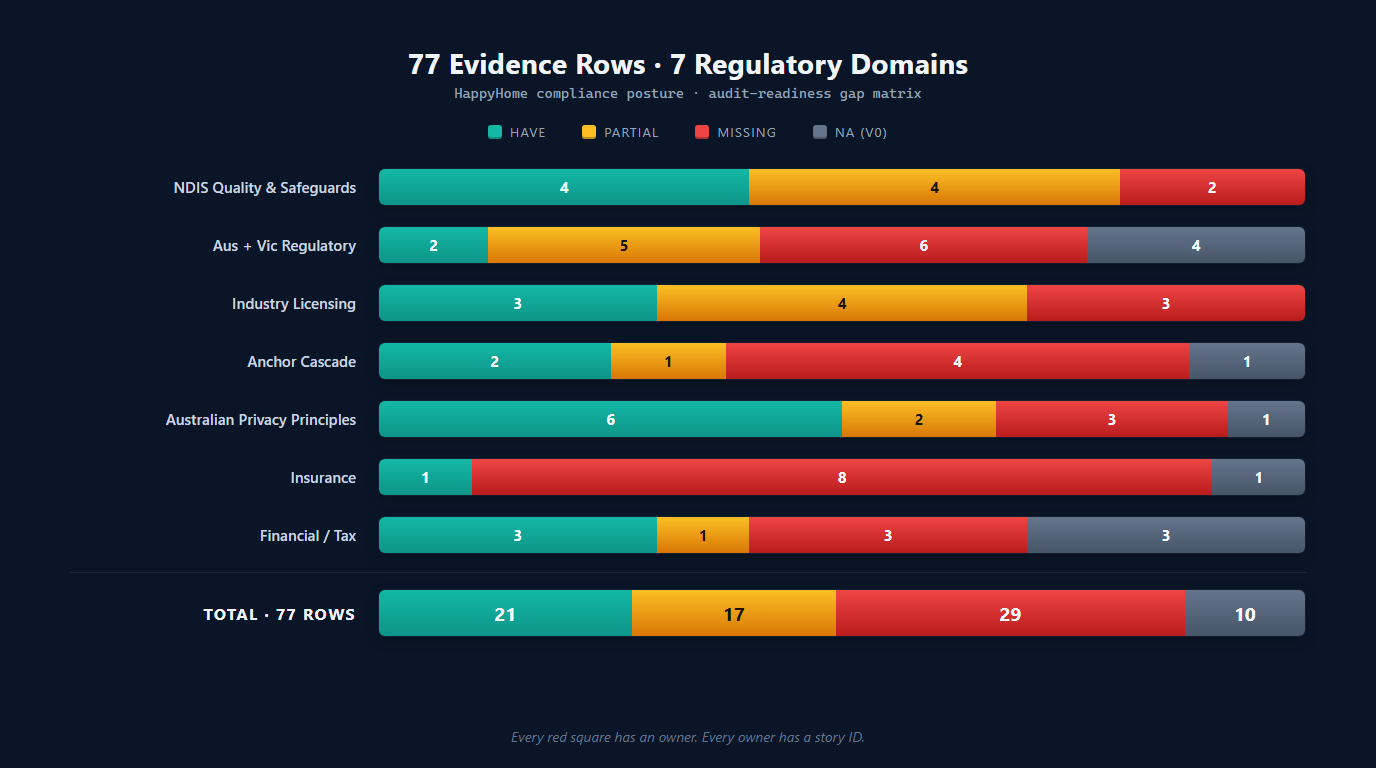
| Domain | ✅ Have | 🟡 Partial | 🔴 Missing | ⚪ NA |
|---|---|---|---|---|
| NDIS Quality & Safeguards | 4 | 4 | 2 | 0 |
| Aus + Vic Regulatory | 2 | 5 | 6 | 4 |
| Industry Licensing | 3 | 4 | 3 | 0 |
| Anchor Cascade | 2 | 1 | 4 | 1 |
| Australian Privacy Principles | 6 | 2 | 3 | 1 |
| Insurance | 1 | 0 | 8 | 1 |
| Financial / Tax | 3 | 1 | 3 | 3 |
| Total | 21 | 17 | 29 | 10 |
Twenty-nine missing items. But here’s the difference: they are no longer unknown unknowns. Every red row is mapped to a specific backlog story with an owner and due date.
What This Actually Cost
Six hours of my time. Two structured conversations with TrendAI OS. No compliance consultants. No retainers.
The AI didn’t make the decisions. It acted as a ruthless forcing function — surfacing every decision that needed to be made, structuring the output, and maintaining traceability back to the master backlog.
The Generalised Pattern
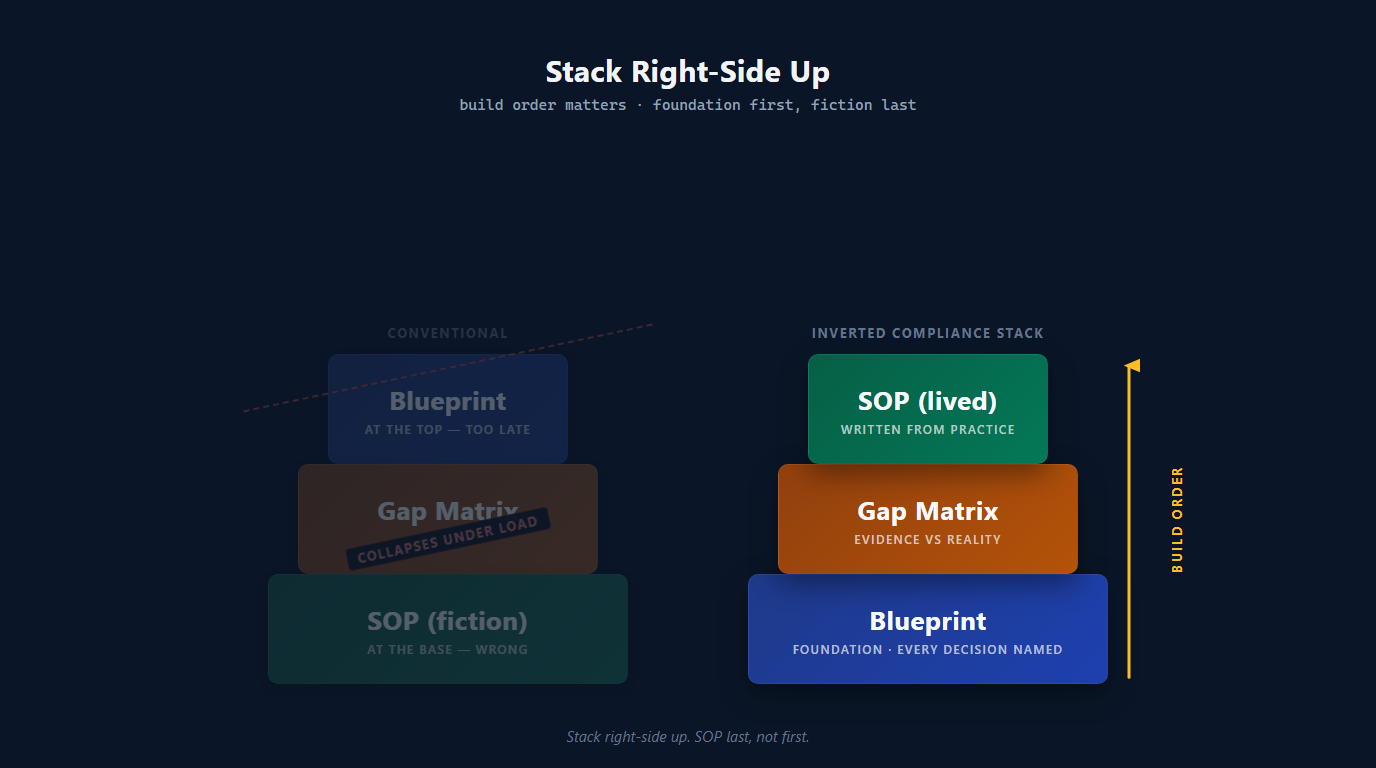
This inverted compliance stack works for any regulated domain (NDIS, aged care, allied health, fintech, etc.):
- Blueprint — Make every operating decision visible and flagged
- Gap Matrix — Map required evidence against current reality
- SOP — Write it last, based on actual practice
The conventional path wastes the most valuable resource a solo or small operator has: the ability to lock decisions before they become expensive.
Current Reality
HappyHome is not yet launched. Two significant blockers remain (insurance binding and lawyer-reviewed service agreements). First subcontractor and first paid job are still weeks away.
But we have something rare for a pre-revenue venture in a regulated industry: zero unknown unknowns on the compliance surface. Every gap is named, sized, and queued.
That is the real advantage of a mature AI Operating System — not that it does the work for you, but that it gives one founder the leverage to see and own every critical decision at speed.